
戴夏飛 Frédéric Deschamps
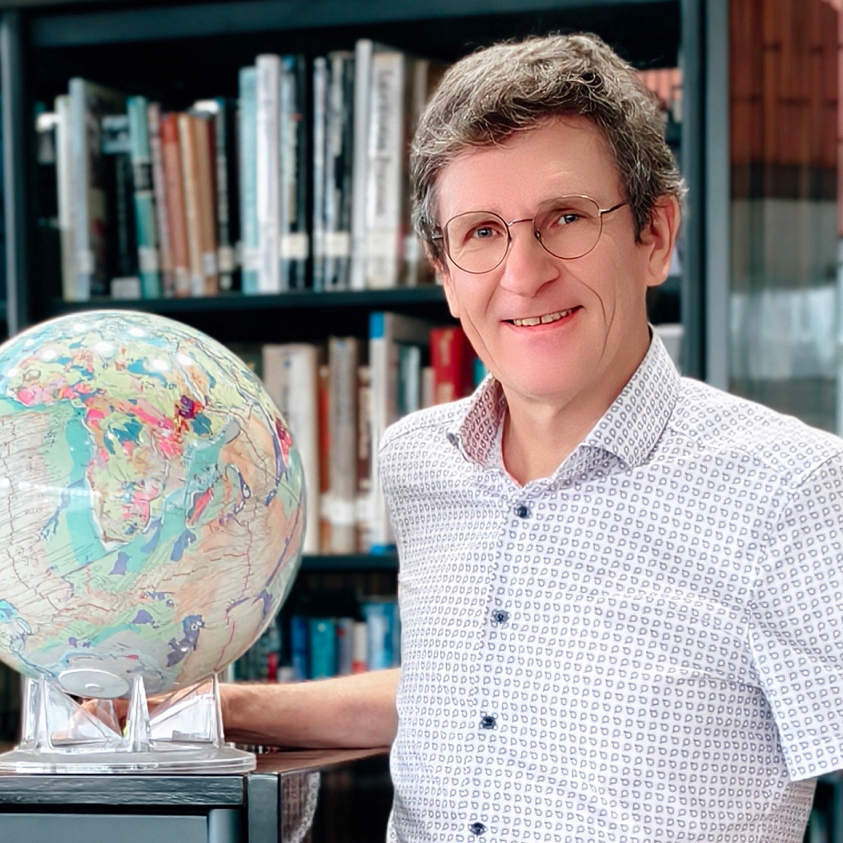
中央研究院地球科學研究所研究員
學歷
- 法國巴黎第十一大學/南特大學博士(1997)
- 法國巴黎第六大學/巴黎第十一大學/巴黎高等師範學院地球動力學和地球物理學碩士(1992)
- 法國巴黎第十一大學基礎物理碩士(1991)
經歷
- 中央研究院研究員(2018/8~迄今)
- 中央研究院助研究員/副研究員(2011/11~2018/7)
- 瑞士蘇黎世聯邦理工學院高級研究員(2005/9~2011/10)
個人勵志銘
“Let it be”. Sometimes things go wrong. We have to accept it and remind that tomorrow is another day that may bring better things. Scientific research also works like this.
Exploring Rocky Planets Interiors
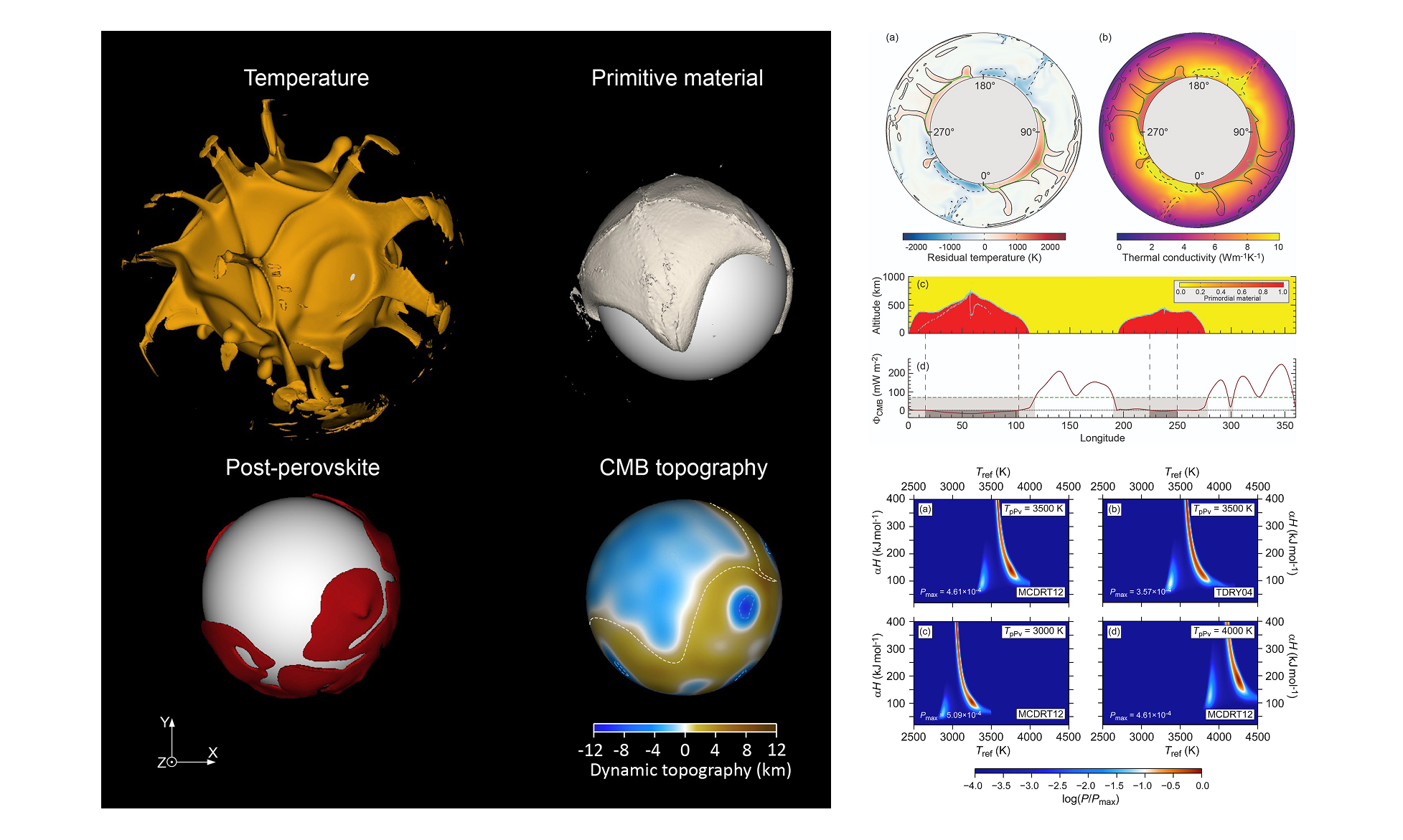
My research activities address the dynamics, evolution, and structure of rocky planets and icy moons interiors, with a particular focus on the Earth's mantle. A central task of this work is to perform simulations of convection to understand the role played by key parameters, such as viscosity, on the flow pattern and on the heat and mass transfers through planetary mantles and ice shells. In the past few years, I used seismic attenuation data to show that the large anomalies in seismic shear-wave velocity observed by seismic tomography strong in the deep mantle are caused by both compositional and thermal changes. Still using seismic attenuation, I developed a method to constrain the temperature at the boundary between the Earth’s core and mantle (CMB). I modelled the topography at the CMB, and showed that it can be used as a test to decide the nature, purely thermal or thermo-chemical, of seismic anomalies observed in this region. I explored the impact of variations in thermal conductivity on mantle convection, a key result being that at the CMB heat may locally flow from the mantle to the core. This finding has considerable implications to understand the evolution of the Earth’s magnetic field. I built a thermal evolution model for Europa, a satellite of Jupiter, taking into account tidal dissipation within this body and showing that its outer ice shell thickness is in the range 15-45 km. This result reconciles estimates made from surface geology observations and numerical modeling. Still for Europa, I showed that pockets of molten ice can be generated close to the surface as long as the ice layer remains thinner than 40 km. Altogether these researches brought new insights on deep Earth and icy moons structures and evolutions. They further triggered or were used for new research works.
得獎感言
I am deeply honored to receive this National Science and Technology Council Outstanding Research Award, and would like to thank the committee for this distinction. This is for me the recognition of my research works in Earth sciences, and it therefore a great source of satisfaction. This recognition also belongs to my collaborators at Academia Sinica and in other institutions. Since my PhD, my motivation to perform research in Earth Sciences was driven by curiosity about how our planet is evolving, and what is happening in its interior. To try to decipher some of these secrets, I engage in rigorous academic researches, mixing theoretical developments, numerical simulations and data modelling. This award inspires me and encourages me to continue exploring the Earth and its mysteries. I hope to make more contributions in the future, and that these contributions will be helpful to my colleagues and inspire young scientists to further explore deep planetary interiors.
 Copyright 2026 © National Science and Technology Council 國科會
版權所有
Copyright 2026 © National Science and Technology Council 國科會
版權所有